A merchant in Baghdad sent his servant out to the market to buy provisions, and the man came back within the hour, white and shaking and without the provisions.
Master, he said, I was in the crowd at the market and a woman jostled me, and when I turned round to see who it was, I saw that it was Death. And she looked at me and made a gesture. A threatening one.
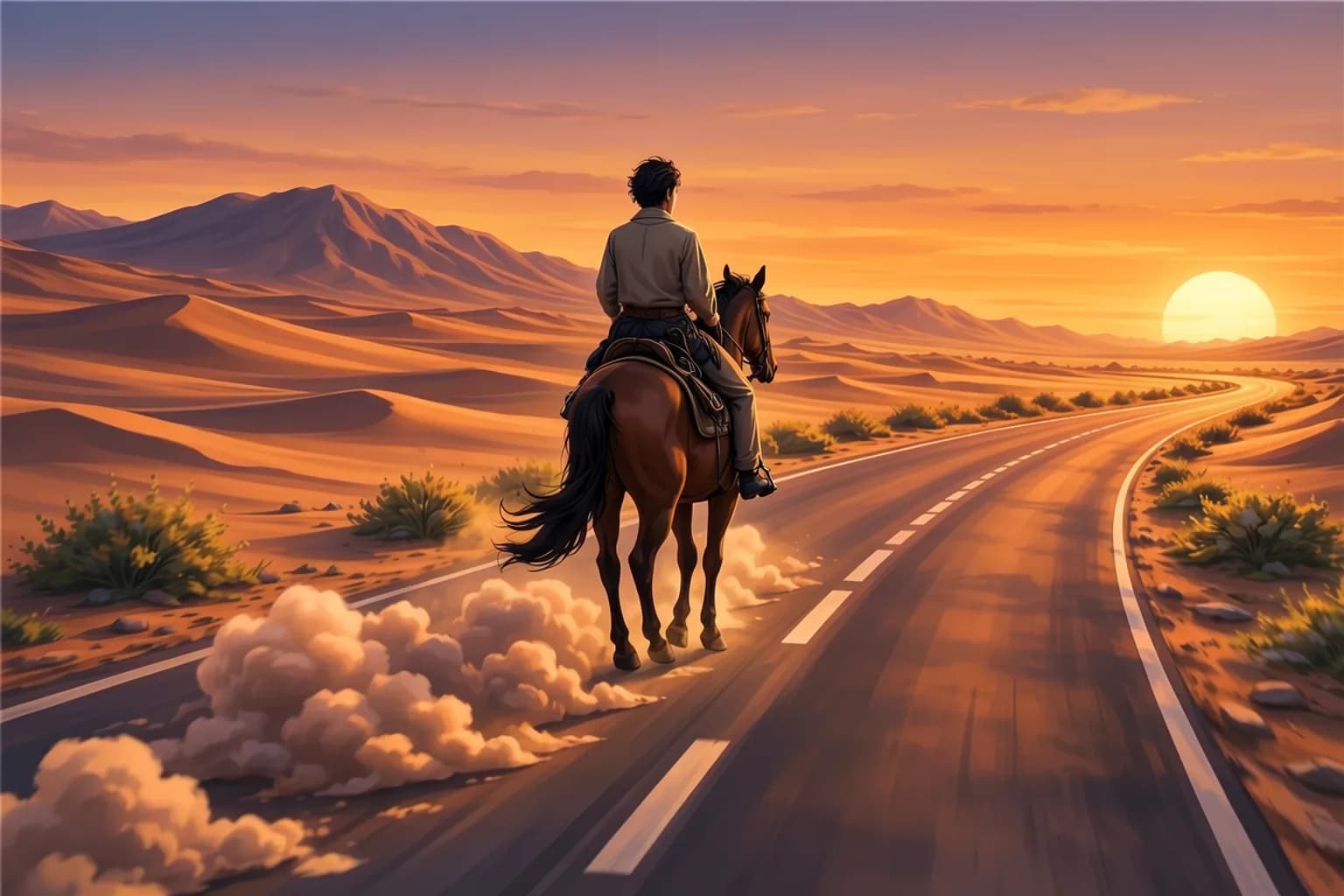
Lend me your horse, he said. I will ride to Samarra tonight and she will not find me there.
The merchant lent him the horse. The servant took it and rode out of the city hard, going north, and the merchant watched him from the gate until he was gone from the road.
Then the merchant went down to the market himself, because he was a curious man and because he was angry, and he found Death standing in the crowd where his servant had described her.
He went straight up to her and asked what she meant by it. Why did you make a threatening gesture at my servant this morning.
She said it had not been a threatening gesture. It had been a start of surprise.
I was astonished to see him in Baghdad, she said, because I have an appointment with him tonight in Samarra.
The Lesson of Appointment in Samarra
Fear is a poor navigator. The servant did not choose Samarra for any reason. It was simply away, and away felt like a direction. Almost every decision made in the first ten minutes of panic has that quality, and almost none of them survive being looked at the next morning.
The thing you are running from is often the thing you are arranging. This is the part that keeps the story alive after a thousand years. The man who fears being left behaves in ways that get him left. The one who fears being seen as a fraud takes no risks and so never becomes competent. He borrowed the horse himself. Nobody put him on it.
Not everything can be outrun, and knowing which is which is most of wisdom. Some things genuinely respond to fleeing, and you should flee them. Some are appointments. Spending your last day riding hard in the wrong direction is only a tragedy if you had a choice, and the story is careful never to tell you whether he did.
Where this actually comes from
The version everyone knows is Somerset Maugham's. He wrote it in 1933 as a short speech given by Death in the first person, and it is his phrasing that made it famous, his Baghdad, and his Samarra. John O'Hara borrowed it for the title of his novel the following year and it has been quoted ever since as though it were an ancient Middle Eastern tale.
It is older than Maugham, but not in that form.
The oldest version we have is in the Babylonian Talmud, in tractate Sukkah, where it is King Solomon rather than a merchant, two of his scribes rather than a servant, and the Angel of Death who is surprised to see them because they are due elsewhere. Solomon sends them away on the wind to save them and they arrive at exactly the place they were expected.
The story then travelled through Sufi literature, and a version appears in Rumi's Mathnawi in the thirteenth century, again with Solomon, and again with a man begging to be sent somewhere far away.
What Maugham changed was the ending. In the older tellings there is a king trying to help and a lesson about the limits of even the wisest man's protection. Maugham removed the king, gave the speech to Death, and let it end on the twist. That is why the modern version feels like a trap closing, and the ancient ones feel more like grief.
The rest is for seekers
Keep reading free. Log in and every article on Reality Awake opens for you.